

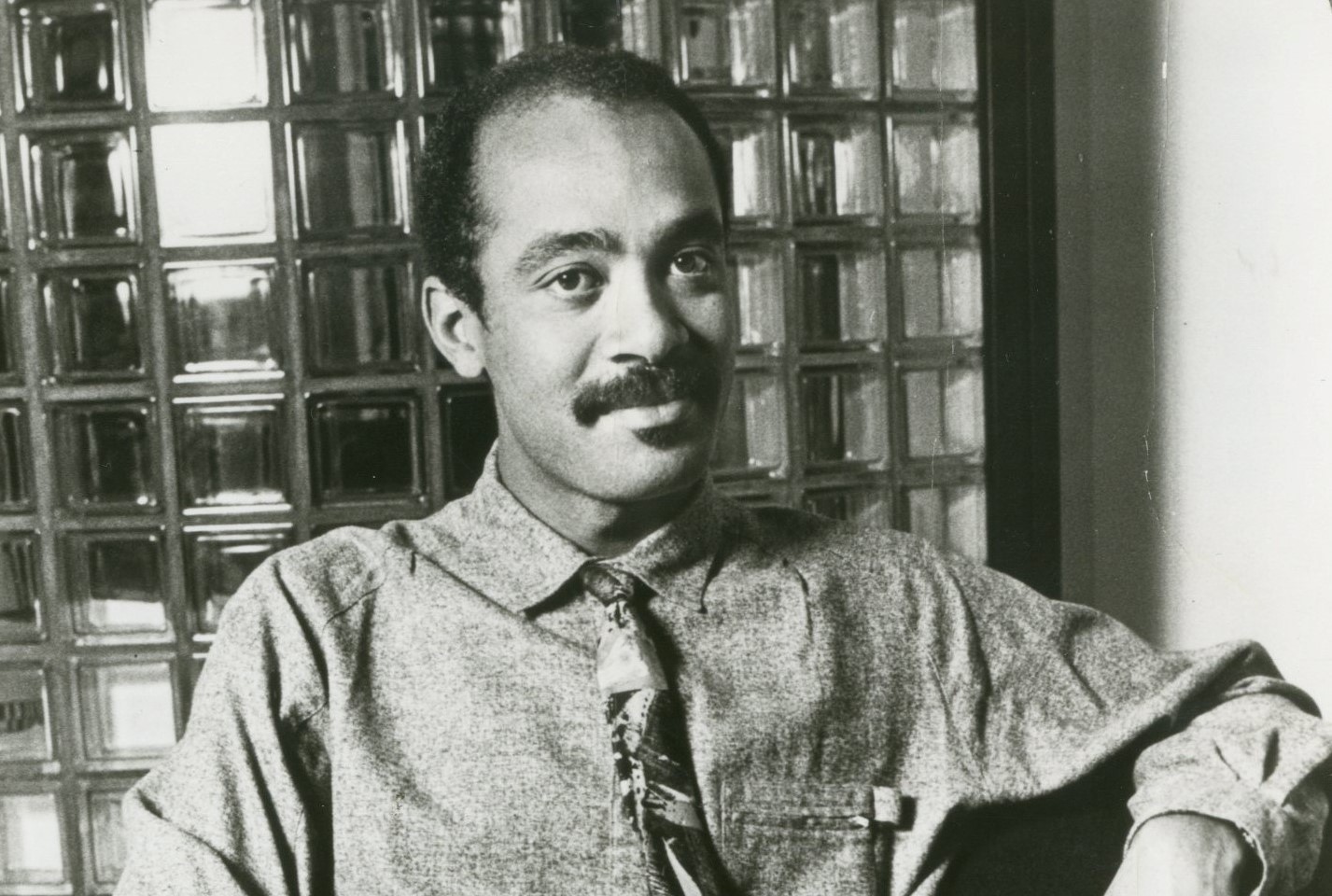
Fabrice Simon was one of those rare artists who could take fabric and turn it into poetry. Born in Port-au-Prince, Haiti, in 1951, he moved to the United States as a young man with a dream that would soon captivate New York’s fashion and art world. In the 1980s, while the city pulsed with energy, music, and creative rebellion, Fabrice emerged as one of the most influential Black designers of his time, blending the elegance of couture with the vibrant colors and rhythm of his Haitian roots.
His work stood out instantly. Fabrice’s gowns shimmered with sequins, beads, and movement. They were art pieces that embodied life, femininity, and freedom. Celebrities, socialites, and dancers wore his designs with pride. His creations graced the stages of high society events and the pages of international fashion magazines. Yet behind the glamour was a quiet soul who carried the humility of Haiti and the creative restlessness of an artist searching for perfection.
Fabrice was not just a designer; he was also a painter. His love for color and light could be felt in everything he touched. He moved between fashion studios and art galleries with the same grace his models carried down the runway. To many, he represented what it meant to be both Haitian and cosmopolitan, a bridge between cultures, worlds, and identities.
But in the midst of success, the shadow of the AIDS epidemic fell upon New York. Like so many creative voices of that era, Fabrice Simon faced a diagnosis that would change his life. The 1980s and 1990s were years marked by fear and stigma, when being open about HIV often meant social exile. Yet Fabrice continued to work, create, and live with dignity. His designs remained luminous, reflecting not despair but a quiet defiance.
He passed away on July 29, 1998, in New York City, at the age of 47. His death came at a time when awareness around HIV and AIDS was beginning to shift, but much of the damage, emotional, cultural, and artistic—had already been done. The world lost not just a designer but a visionary whose art was deeply rooted in joy and resilience.
Today, Fabrice Simon’s legacy continues to inspire a new generation of Haitian and Caribbean designers who see in his story both triumph and tragedy. He showed that creativity can flourish even in the face of illness and that art has the power to transcend pain.
As the world marks World AIDS Day, Fabrice Simon’s life reminds us that beauty is not only what we see but what we endure. He lived through a time when fear defined the illness, yet he chose to create beauty instead. His story is a tribute to those who lived, loved, and created despite HIV, proving that even in fragility, there can be strength, grace, and brilliance.
