







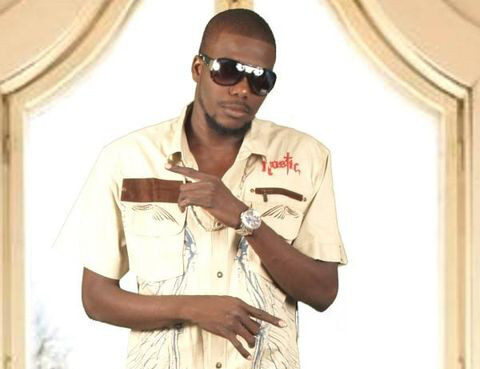
The young MC passed away from an asthma attack early on June 1, 2011. Many didn’t know him personally, but they enjoyed his music. For those listeners, we are publishing an article written by our colleague Paul Fernand Valcourt in 2009, which presents the artist’s life and career.
G-Boby: A One-of-a-Kind Artist
G-Boby was not like other artists. He was the only solo rapper who gained major popularity and tremendous success without ever releasing an album. Born in Bel-Air on September 9, 1985, he spent his childhood in Carrefour, where he continued to live. Music was his main source of livelihood and his greatest passion. Known for his lyrical talent, he described himself in one of his songs as “the new world rap artist.” G-Boby was regarded as one of the most gifted lyricists in Haitian Creole rap. “You want to know more about me? Jameson Toussaint, better known as… That’s me!!! The n****r Bon Flow!!!”
The Beginning of Bon Flow
G-Boby Bon Flow began his career as a member of the group Chale Repiblik, where he started to make a name for himself. Hit songs like Ti Klé Monte Ti Klé Desann and Madan Sara are among his works, showcasing his talent. Some group members underestimated his abilities and didn’t give him the respect he deserved, leading him to go solo.
His Success
Thanks to his song Koreksyon, a reply to Fantom (of Barikad Crew)’s track Deplase La, Bon Flow earned the trust of Haitian rap fans. According to his own claims, he was the greatest Creole rapper, an international-level artist, and the most active pure talent in the movement, stating “Rap Kreyòl la pa gen nivo pou mwen” (Creole rap is not on my level). He believed no Haitian rapper could match his accomplishments and that it would take at least 50 years for another artist like him to emerge.
He credited his skill to five years (1998–2003) of personal study on the works of major American rappers from both old and new generations, including Biggie, Tupac, Dr. Dre, Snoop Dogg, Nas, Jay-Z, Eminem, and 50 Cent.
Boby: A Man from the Ghetto
“I don’t want to hide the reality of the ghetto, I lived there.”
G-Boby said he described ghetto life through his music. Koreksyon was a great success, but Bon Jan Nèg Ghetto (Real Ghetto Man) gained even more attention. He said some fans even rewarded him with money for this track, which was played on FM radio. However, he also acknowledged the positive side of ghetto life, adding, “I speak about what I’ve lived in the ghetto and the stories of others.”
G-Boby Wants to “Speak Up”
His album Pale Cho (Speak Boldly) had been in the works since 2003 and was completed, planned for release at the end of the year. The album title was chosen in memory of a late friend who always said, “Pale cho non atis” (“Speak up, artist”) whenever he asked G-Boby for something.
Although the project was initially supposed to be released with his mother’s collaboration, his management decided otherwise. His mother reportedly invested several thousand dollars in the project. Manager Carl Henry Desmornes later showed strong interest in G-Boby’s work.
The album was to include 21 songs, 2 of them in English to help launch his international career. Tracks such as Bon Jan Nèg Ghetto, Presizyon, and Gang Sa were confirmed, though Koreksyon (Map Kanpe La) would not be included. He chose to record two English songs because he was in talks with international producers and planned to release a 12-track demo entirely in English.
Featured artists included Sargine on Pou Ayiti and Cyril, another rapper he produced, on Pwovèb Lakay. Seventeen of the songs were produced by Dice, one by Beat Gates, another by Beat Mox, and the last two by an international beatmaker and former member of Chale Repiblik who worked under Thirty Tek. G-Boby wrote and composed all of his songs himself.
His Heart Was Taken
Jameson Toussaint was in a relationship, though he chose not to reveal the identity of his partner. He mentioned they were working to overcome minor personality differences but hoped for reconciliation because they shared one thing in common — love.
G-Boby vs. Fantom or Barikad Crew
“There’s no rivalry between me and Fantom or Barikad Crew. This is just business; it’s the fans who created it, and we accept it. Everyone already knows I’m stronger than Barikad. Their reign is over.”
The Story Behind His Slogan “That’s Me!”
“In the past, I used to say ‘Wi wi wi…,’ which sounded similar to Bricks’ ‘Wi!’ so I stopped and came up with ‘That’s me!’ And now, it’s become the slogan of the moment. It’s all about G-Boby Bon Flow — That’s me!”
The artist was confident that once his album Pale Cho was released, everyone would recognize his talent and value. He promised to launch his international career in 2010. We wish success to G-Boby.


