

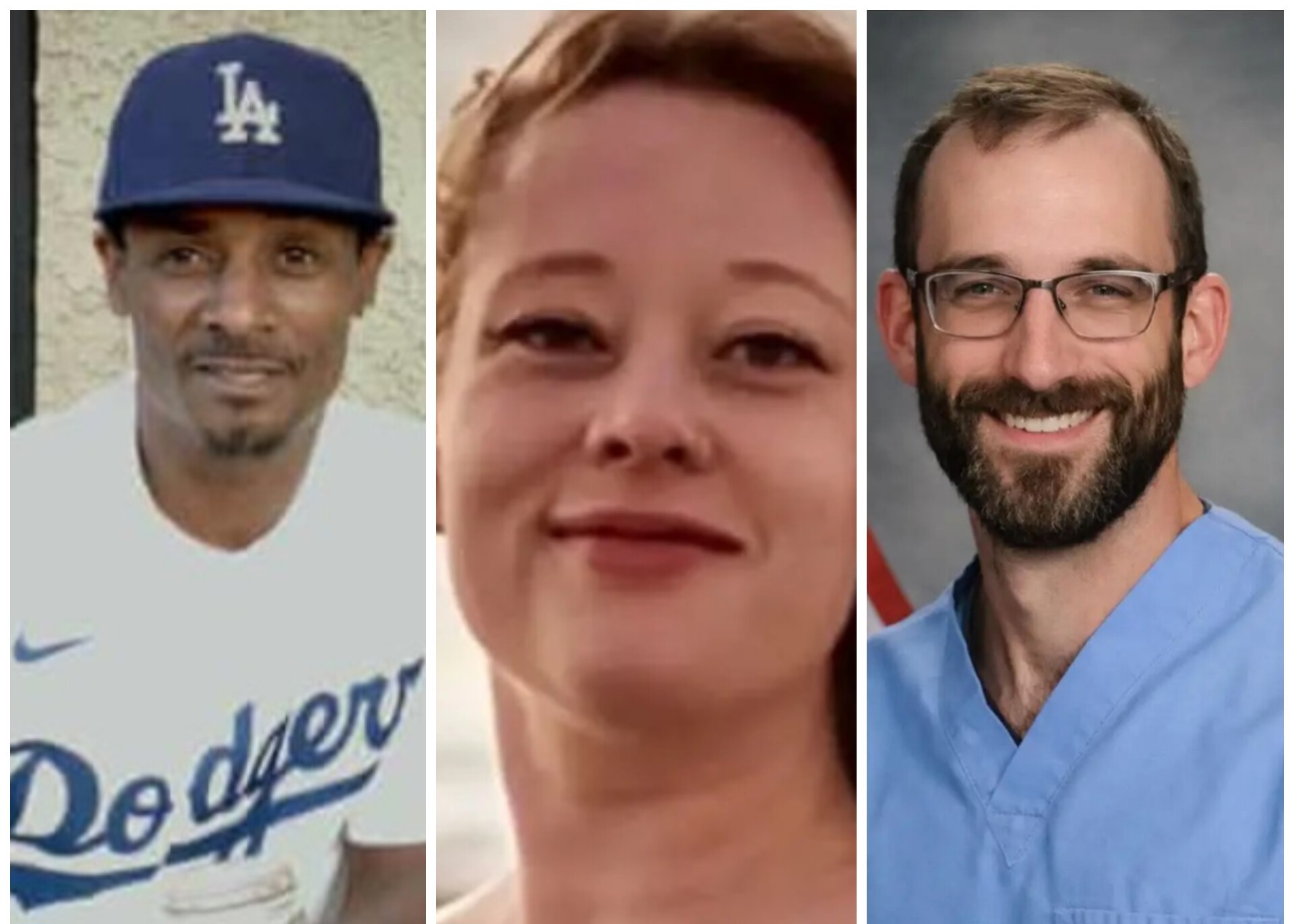
The killing of Alex Pretti by federal immigration agents in Minneapolis is no longer shrouded in anonymity. The names of the two agents who fired the fatal shots have now been made public through federal records, and with that disclosure, the case has entered a new phase. One that Pretti’s family says must finally lead to accountability, not another closed file and carefully worded press statement.

Federal authorities have now identified the agents involved in the January 24 shooting of Alex Pretti as Border Patrol agent Jesus Ochoa and Customs and Border Protection officer Raymundo Gutierrez, both deployed as part of a large-scale immigration enforcement effort in Minneapolis known as Operation Metro Surge. According to government records, 43-year-old Ochoa has been with the U.S. Customs and Border Protection (CBP) as a Border Patrol agent since 2018 and was assigned to the operation when the deadly encounter occurred. He is from south Texas and, according to reports, has an interest in firearms outside of his official duties. Gutierrez, 35, joined CBP in 2014 and serves in the agency’s Office of Field Operations; he has been described as part of a special response team that handles high-risk missions similar to police SWAT units. Both men were among the federal officers dispatched into Minneapolis under a controversial federal enforcement surge, and both have been placed on administrative leave while the Department of Justice’s Civil Rights Division and the FBI continue their investigation into the shooting. As of now, no criminal charges have been filed against either agent, a fact that has intensified public scrutiny and calls for accountability.
The U.S. Department of Justice has confirmed that it has opened a federal civil rights investigation, with the FBI and the DOJ’s Civil Rights Division reviewing body camera footage, surveillance video, witness statements, and forensic evidence. That investigation is focused on whether Pretti’s constitutional rights were violated and whether the use of deadly force was lawful. Civil rights cases against law enforcement carry a high legal threshold. Prosecutors must show not just that the force was unreasonable, but that it was willfully unconstitutional.
For Pretti’s family, that standard feels less like protection and more like a wall they have seen too many families hit before.
In public statements and through their attorneys, the family has been clear about what they are demanding. They want full transparency, the immediate release of all video footage, an independent investigation not controlled solely by federal agencies, and criminal accountability if evidence shows excessive force. They have also called for federal immigration officers to be subject to the same level of scrutiny and oversight as local police when deadly force is used.
More importantly, the family has rejected early narratives that attempted to frame the shooting as routine or unavoidable. They have stressed that Alex Pretti was not a faceless statistic, but a real person whose life ended during an encounter that still has unanswered questions. For them, naming the agents is not about vengeance. It is about ending a system where federal officers can kill and remain unnamed for weeks while families wait for answers.
What has made this case resonate beyond Minneapolis is that, to many observers, it does not feel isolated.
Civil rights advocates and community leaders have pointed to previous deadly encounters involving federal or law enforcement officers, including the cases of Rene Good and Keith Porter, as part of a broader pattern families say keeps repeating.
The killing of Rene Good is frequently cited by advocates as another example of how encounters involving federal agents can escalate rapidly with limited transparency afterward. Court records and investigative reporting have identified the federal officer who shot Good as Jonathan Ross, an Immigration and Customs Enforcement (ICE) agent and Iraq War veteran who has served in federal enforcement roles for nearly two decades. Like many similar cases, the immediate release of information was limited while official narratives formed quickly.

Family members and supporters have argued that key questions about the encounter were left unanswered in the early stages, including how decisions were made, what de-escalation efforts were attempted, and why lethal force became the outcome. As with other cases involving federal agencies, jurisdictional complexity made it difficult for local authorities to take the lead, placing control of the investigation largely in federal hands.
Advocates point to Good’s case as part of a recurring issue, not necessarily identical facts, but similar aftermaths. A fatal encounter, delayed disclosure of evidence, and families left navigating federal systems that are often opaque and slow to respond. For them, the concern is not just what happened in one moment, but how consistently federal authority appears insulated from swift, independent review.
While courts have not ruled these cases legally connected, families and civil rights groups argue the pattern lies in process rather than circumstance. When federal agents are involved, transparency often arrives late, if at all.
In another high-profile case drawing national attention, **Keith Porter Jr., a 43-year-old father of two from Northridge, California, was shot and killed by an off-duty U.S. Immigration and Customs Enforcement (ICE) agent on New Year’s Eve. Authorities said the agent, who lived in the same apartment complex, heard gunshots and went to investigate, encountering Porter holding a long rifle; federal officials claimed Porter fired at the agent and refused to drop the weapon, leading to the fatal shooting. Family members, however, say Porter was firing into the air as part of a New Year’s Eve celebration and did not pose a threat, and neighbors reported that the officer did not clearly identify himself before shots were fired. The identity of the agent has not been officially released by the government, but court filings indicate the suspect may be ICE officer Brian Palacios. Meanwhile Porter’s family and civil rights advocates have condemned the killing and called for transparency, accountability, and justice, questioning why no arrest or charges have been announced and urging a full investigation into the circumstances of his death. Protesters and community members have said that if the shooter were not an ICE agent, procedures would have unfolded very differently, highlighting broader concerns about federal immunity and use of force.
Families connected to both cases have repeatedly said the same thing. The problem is not one officer, one department, or one city. It is a system that defaults to shielding authority first and explaining later, if at all. Different uniforms, different agencies, same outcome. A fatal shooting, an internal investigation, delayed transparency, and families forced into the role of investigators simply to get basic answers.
No court has ruled that these cases are legally identical, and families themselves are careful not to claim they are. But they argue the similarities are impossible to ignore. In each instance, the burden appears to shift almost immediately onto victims and their loved ones to prove wrongdoing, while the state is afforded time, silence, and procedural protection.
That is why Pretti’s family is pushing not only for justice in this case, but for structural change. They want clearer rules governing federal agents operating in civilian spaces, mandatory independent prosecutors for federal officer shootings, and an end to what they describe as a two tiered system of accountability where federal badges come with additional insulation from scrutiny.
For now, the case sits in the hands of federal investigators. Administrative leave remains in place. The civil rights probe continues. And the question that has followed so many similar cases remains unanswered.
Will this investigation end differently, or will it quietly join the growing list of names families say were supposed to matter more than they did.
For Alex Pretti’s family, this is not about politics, immigration, or jurisdictional turf. It is about a life lost, a system under scrutiny, and a demand that accountability stop being the exception.
They are not asking for special treatment. They are asking for equal justice.
